Automation & AI
•
AI Flags At-Risk Members 45 Days Before They Cancel
How predictive automation catches disengagement early enough to actually do something about it.
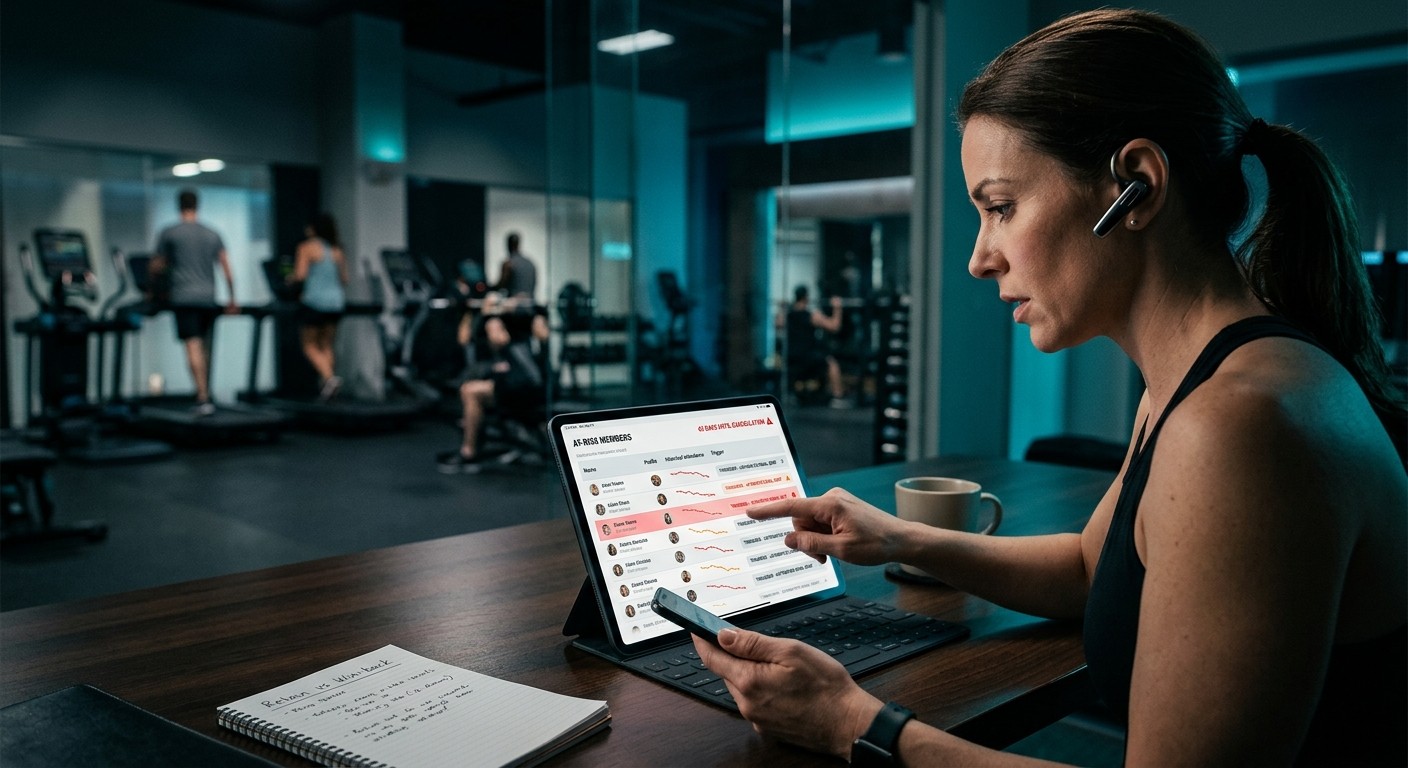
The cancellation you see coming is already too late
By the time a member submits a cancellation request, the decision is usually weeks old. Predictive retention tools identify the warning signs 20 to 45 days earlier — a drop in check-in frequency, skipped classes, reduced booking activity — and trigger outreach while re-engagement is still possible. That window is the difference between a retained member and a lost one.
Current AI retention tools flag at-risk members with 70 to 85% accuracy before they cancel. That accuracy is only useful if your workflows are built to act on it immediately.
What the numbers look like in practice
One three-location boutique gym implemented automated onboarding, usage-triggered outreach, and an FAQ chatbot. Annual churn dropped from 28% to 17% — approximately 165 additional retained members and $118,800 in recovered annual revenue at a $60 monthly fee.
A separate case reported monthly churn falling from 25 to 15 members — a 40% reduction — with 127 at-risk members retained over 12 months. The trigger was attendance falling 50% below a member's personal baseline for seven consecutive days.
Win-back timing matters just as much. Automated outreach within 14 days of a member's last check-in achieves a 38% re-engagement rate. Waiting 30 or more days drops that to 12%. That gap represents members your staff could have saved but didn't reach in time.
How to build a system that actually intervenes
Define your trigger: Set a specific attendance threshold — not a gut feeling. A 50% drop from baseline over seven days is a workable starting point.
Connect your data first: Predictive alerts are only as reliable as the attendance data feeding them. Your CRM, booking software, and membership platform need to share member IDs and check-in records consistently.
Build a response workflow: When a member is flagged, the system should send a personal-feeling message within 24 hours, create a staff task for follow-up, and offer a low-friction re-entry — a complimentary session, a class recommendation, or a quick check-in from a coach.
Assign human ownership: AI identifies the risk and drafts the message. A coach or membership manager handles the conversation if the first automated touchpoint gets no response.
Measure retained members, not open rates: The only metric that matters here is how many flagged members remained active 30 and 90 days after intervention.
Where most gyms go wrong
Sending a generic check-in message to every flagged member destroys the credibility of the system. Members whose goals, class preferences, and attendance history are ignored in the outreach recognize it immediately. Personalization — even basic segmentation by membership type or last class attended — meaningfully improves response rates.
Launching too many retention workflows at once also creates message fatigue. Start with the low-attendance alert and a single structured response sequence. Once that performs consistently, layer in cancellation-prevention and win-back campaigns.
Retention automation does not replace your team. It makes sure your team focuses on the members who actually need them — before those members are already gone.